Thursday, April 30, 2020

Turning Tragedy into Agency

The COVID19 pandemic is truly a harrowing time for some. Around the world, families are losing their income, people are losing their home and loved ones, health insurance and financial security are being ripped away, and mental health is on a general decline from isolation. Back in the global Spanish Flu Pandemic of 1918, industrial production and consumption slowed dramatically,but it picked back up within a year to be higher and faster-paced than it ever had been before; “In 1918, influenza had a far greater effect on worldwide trends in industry, production and consumption than the first world war… Yet today when we look back at demographic and economic trends, that last great pandemic appears as a small blip with few long-term consequences” (Dorling, 2020). However, in the same Guardian article by Dorling, the current economy is described to be in a ‘slowdown’. The economy hasn’t been accelerating and growing, even prior to this pandemic. We just haven’t noticed because until now, it has been almost unnoticeable.

The news of the pandemic is full of images of healthcare workers with nearly bloody lines cut into their faces from wearing masks for hours on end. There are images of protesters, and protesters protesting the other protest. Images of truckers and grocery store workers sleeping in their cars or garages so as to not infect their families. Images of doctors crying outside of hospitals, and family waving through glass panes. Photographs of people who have lost their jobs, of farmers having to destroy their produce. Shelves empty, production assembly lines halted, city centers as ghost towns. It is these images that we will think of when we remember this pandemic. These images are haunting, they show people struggling, and they often evoke images we see from times of war or the great depression. In the book No Caption Needed, Robert Hairman and John Louis Lucaites, discuss the way tragic photographs make issues personal, “By activating this deep register of moral response, the photograph coun- teracts the conventional political realism that places war and international relations generally outside the moral circumference of domestic politics” (Hairman et al., 178). This is interesting, because it is important in how we move forward from the pandemic. If we focus our visual energy on the people the pandemic is harming, the people who have lost jobs and the tired faces of essential workers, we make the tragedy about the people still living. We cannot afford to focus on showing images of the virus or images of the people it has claimed. That wouldn’t allow us to work towards a healthier future. In this way, iconic photographs can be understood to be drivers of narrative, or catalysts. When done correctly, they push progress and care forward, and lessen the powerless feeling of a truly apocalyptic narrative where people choose to do nothing. 

Moving forward, these images will be important to keep in mind, as it seems we have a slow path towards economic recovery and may not return to acceleration; “since the 1930s, technological change has slowed; the rate of economic growth has slowed every decade after the 1950s; population growth similarly has slowed since before the 1970s; and since at least the 1990s we have started to behave more like our parents again. By the 2010s we (at least in the rich world) were no longer seeing each generation better-off than the one before” (Dorling, 2020). This slowdown, and change is a good thing. The rate we were moving at, and we expected to continue moving at was not sustainable. Not sustainable for our planet, or for our country. To conclude, the pandemic and the chilling photographs of life at a standstill, may allow tragedy to be turned into optimism; “Everything was slowing down already, everything will still slow down when the current crisis ends. But the slamming on of the brakes on the train we were travelling on might, at the very least, wake us out of our stupor” (Dorling, 2020). The pause was necessary. 

Monday, April 27, 2020

Pandemic Protest Motivators: Trump’s Charismatic Leadership


As the coronavirus pandemic continues to sweep the nation, tensions are rising as new, tighter restrictions continue to be imposed and enforced in order to lessen the consequences of the deadly virus. Michigan in particular has been a hotbed of unrest, with Governor Gretchen Whitmer facing backlash after the announcement of her latest stay-at-home order. Michigan has been one of the hardest hit states in the nation, with the third-highest number of confirmed coronavirus-related deaths, according to data collected by the Center for Disease Control and Prevention. To reduce the rate of infection within the state, Whitmer’s executive order on April 9th imposed some of the country’s tightest restrictions. Even amidst tough restrictions, Governor Whitmer has the support of the majority of the state. A poll released on April 20th by the Detroit Regional Chamber of Commerce found that 57 percent of Michigan residents approved of Whitmer, compared to only 37 percent who disapproved of her approach to the crisis. However, these new mandates were not received well by all Michigan residents, with thousands of far-right conservatives flocking to the state capital of Lansing to protest. Many of the protestors flew Trump 2020 flags and sported MAGA gear as they demonstrated over concerns that the new stay-at-home order is in violation of constitutional rights. Regardless of the favorable opinion shown in the polls, and the support of the majority of Michigan voters, the impact of the protest was still significant. Despite the protest being ostensibly called to oppose the additional restrictions, it was also “the clearest sign yet of a simmering ideological movement on the right resisting government mandates over the virus” (Gabriel and Marin, 2020). 

The spotlight was initially shone on Whitmer last month when President Trump cavalierly referred to her as “the woman in Michigan.” (Zeleny, 2020) Whitmer has become a political target as she is widely considered to be a potential contender to run alongside Joe Biden as vice president. Even if she is not selected as the vice presidential nominee, her popularity may help the Democratic party win Michigan in the presidential election. Trump has continued to make other condescending comments about her, including referring to her as “Gretchen ‘Half’ Whitmer,” and describing her as being “in over her head." (Mehta, 2020) Trump’s success as a charismatic leader against a rival depends on his ability to creatively redefine legitimate leadership and cast his opponents as “unworthy challengers.” (Joosse, 2018) Trump’s disregard for the norms that have traditionally governed political behavior has made him extremely compelling to certain audiences. On the other hand, his opponents, including Governor Whitmer, rarely stray from the traditional norms of civility, making it challenging for them to respond to his often racist, sexist, and xenophobic comments. Trump further established Whitmer as an “unworthy challenger” by openly opposing her radical approach to the coronavirus crisis as he discusses easing national guidelines for social distancing, and then drawing upon the protests as evidence of Whitmer’s performative failure.

In a tweet posted on the Friday following the demonstration, President Trump called upon his followers to “Liberate Michigan” despite the clear reports of the protestors being in violation of federal social distancing guidelines (Gabriel and Marin, 2020). The blatant disregard of the safety of Michigan residents indicates Trump’s intentions to use this crisis as a political platform for the upcoming presidential election rather than to address the pandemic as the catastrophic health crisis that it is. Trump’s charismatic leadership has earned him an extensive group of “devoted followers.” According to Paul Joosse’s theory of charismatic counter-roles, individuals are more likely to participate in a cause if they expect a large number of other people to participate as well. As a result, “leaders may be tempted to draw attention to the performances of devoted followers as a means of setting up conditions that are favorable for motivating others to join the movement.” (Joosse, 2018) In this particular case, Trump’s endorsement of protestors serves as a way to gain more followers by demonstrating his legitimacy through the performed devotion of the protestors. 

Trump is continuing to establish his charismatic authority through performative interactions with both his “devoted followers” and “unworthy challengers”. Through these interactions, Trump ensures that he “is cast as eminently competent while the conventional rivals are rendered seemingly inexperienced, ill equipped, and outmoded.” (Joosse, 2018) These interactions also establish his social value as a result of the “triangular relationship between the leader, enraptured followers, and witnesses who are party to, and potentially inspired by, the devotional performances of the followers.” (Joosse, 2018) Trump has used the pandemic crisis and his authority as charismatic leader to further his own ends in pursuit of another presidential term by utilizing charismatic counter-roles to provide authenticity to his performance. 


Sunday, April 26, 2020

Pandemic Protest Motivators: Karakaya's Spectacle Seekers

Protesters left their cars and formed an impromptu rally. (NPR)
On Wednesday, April 15th, several thousand cars packed the streets around the Michigan capitol building, honking and blasting music like “God Bless the USA”. “Operation Gridlock” was an event put together by the Michigan Conservative Coalition to protest Democratic Governor Gretchen Whitmer’s extended stay at home order. While organizers urged protesters to stay in their cars, a group gathered on the steps of the capitol building, flaunting preventative measures by not wearing masks, standing within six feet of one another, and handing out candy to children, without gloves (NPR). Governer Whitmer characterized the protests as “essentially a political rally”, saying “It wasn't really about the stay-at-home order at all”. News outlets noted that the protest on the steps of the capitol building “took on a flavor of a Trump rally”. There were clear similarities between the two, with many Make America Great Again hats, American, confederate and “Don’t Tread on Me” flags, patriotic rock music, and even chants of “lock her up” (referring to Whitmer instead of former Democratic presidential nominee Hillary Clinton). Yağmur Karakaya’s 2018 article “The Conquest of Hearts: the central role of Ottoman nostalgia within contemporary Turkish populism” characterizes parts of political rallies. If we view the group who gathered on foot during “Operation Gridlock” as a rally and analyze it using Karakaya’s work, we can see that these protesters exemplify her group “spectacle seekers”.

In “The Conquest of Hearts”, Karakaya defines three main groups of people that she sees interacting with President Recep Tayyip Erdoğan’s political rallies in Turkey. The group she calls “spectacle seekers”, enjoy Erdoğan’s rallies. They believe that the events do a good job conveying important emotions about their countries heritage and history of conquest, and the enthusiasm one should feel for their nation. Karakaya’s interviewees said the rallies “make me proud, really….I mean you just go back to the past when you watch this” and “these kinds of enthusiasms and exuberances infuse you with new excitement, which is necessary”. We can see this same view from rally-goers in the United States, and specifically at “Operation Gridlock”. First, the slogan “make America great again”, present at every a Trump rally and the protest in Michigan, is a call to remember and epitomize portions of the United States’ past, much like the rallies in Turkey do with their Ottoman history. Also, the ralliers in Michigan projected tones of conquest, chanting “lock her up”, similar to the way Erdoğan’s rallies hark back to the Ottoman’s conquest. Finally, the “spectacle seekers” Karakaya interviews expressed pride in their country through the events, and rally participants in on the 15th showed their pride as well, through American flags and Lee Greenwood’s “God bless the USA”.

A valid response to this analysis is to question whether we can truly characterize the sub-protest in Michigan as a political rally (I questioned myself as I wrote). But the definitive proof, I believe, comes in the form of a New York Times article. The journalists found that the protests across the country were nurtured by “an informal coalition of influential conservative leaders and groups, some with close connections to the White House”, who are attempting to turn unhappiness over stay-at-home orders into votes in November. When protests turn out to be gatherings to rustle-up votes, it seems to be fair to categorize them as political rallies. In these rallies, through the attitudes of the attendees, we can see “spectacle seekers” as a group prompting protest rallies during the pandemic.

At the Podium: Dissonance Between Press Briefings and Trump Rallies

The focal point amidst continuing turmoil caused by COVID-19 is the federal government. More succinctly, the White House’s James S. Brady Press Briefing Room and its recent, frequent visitors -- including President Trump, VP Pence and members of the White House Coronavirus Task Force -- have emerged as the focal point of pertinent information distribution. Today is the first time since Easter that the daily briefings have ceased, at the behest of Trump’s administration and even Trump himself. This is likely because the briefings themselves have transitioned into something completely outside their intended purposes. Some conjecture that the briefings have become more like rallies, the president’s primary expression of his opinions and way of connecting to his supporters. Because this is an election year, the president’s appearances in these briefings have seemed to shift the briefings’ subjects from guidance through the pandemic to rhetoric aligned with the president’s policy stances and partisan opinions. This shift, in turn, has forged a new parallel in iconicity.

In both settings, Trump operates in the charismatic authority style, one of three leadership styles posited by Max Weber. Though dabbling in qualities of traditional authority and steering from legal-rational authority, he relates most distinctly with generating charisma to invite his supporters further into his ideology. This is an observation made too by sociologist Paul Joose, who points out that “Weber places followers, not leaders, at the center of his etiological account of charismatic power” (“Countering Trump”). He and his followers are a package deal: the MAGA and KAG clothing apparel they don, alongside their uproarious support of his proclamations and booing of his opponents, are bombastic and unyielding. Both in large groups and individually, in appearance and in disposition, Trumpian supporters have become iconic. They evoke intense emotion because they themselves are firm in their intensity, standing behind Trump when he takes the stage or cheering from the unseen crowd. They are a show of support and unanimity, emblematic of his values. Without those supporters attending his rallies, it would be difficult for him to assert his influential position. This is the reality we have seen play out when putting that same figure into the coronavirus briefings.

In the White House briefing room, no one is manifesting any sonic or visual sign of support. The humanitarian and numeral depression this pandemic has taken, both on human lives and almost every corner of the economy, requires a shift in tone. Trump himself has not adapted to this loss in supportive iconography, and the consequences of that fact are playing out in real time. This is why Trump has faced so much pushback in the briefing setting: his assertions were made without the visual backing of his supporters. Behind him were officials from the federal government who were and remain serious in acting in public interest. In front of him was an audience of journalists pressing for clarification beyond his typical superlative-laced speech over the specifics behind his intentions and language. The absence of his iconic supporters has proven damaging to his authority as a charismatic leader, and so it’s no surprise that with his acceleration of reopening states, he has also made it a priority to reunite with that support as soon as possible.

Coronavirus: An Unprecedented Period of War

In the twenty years I've been alive, the United States has faced no shortage of disease outbreaks. The one I remember most vividly is Swine Flu in 2009, but with the more recent Ebola and Zika outbreaks, one would be forgiven for assuming that the country exists in a state of perpetual danger, constantly pummeled by a barrage of ever-worsening illnesses, only one germ away from desolation. Yet that one germ needed to push the US over the edge never seems to arrive. The US always pulls through with relative ease, waits for the next disease, and then immediately forgets about the last one (for example, how many of you completely forgot about Zika until this very moment?). The question then becomes "why?" Why do we react the way we do to disease, why do we keep repeating the same song and dance, and what does this tell us about Covid-19? Perhaps the best way to address these questions is to consider a past similar illness: the 2003 SARS outbreak.

When a farmer from Shunde, China died at the tail end of 2002, he didn't know that he was the first of a series of respiratory deaths traceable to a specific colony of horseshoe bats. He didn't just start one pandemic, though. His infection may have lead to the spread of a coronavirus, but it also lead to the spread of a much more dangerous disease: mass psychogenic illness. SARS was rare. Out of six and a half billion people, only about eight thousand caught it. This isn't because of extremely restrictive quarantine procedures, either. The CDC issued warnings not to travel to China or Southern Asia, but no governments implemented stay-at-home orders. The virus came and went without infecting all that many people. The real danger came in the public's reaction. A study by the Italian Institute of Health found that as much as 12% of news coverage was dedicated to the outbreak of a disease in a country which had only four cases (all of whom recovered.) The overrepresentation had little information. Another study by Brock University found that despite a constant stream of SARS media, as many as 70% of students failed a basic SARS literacy test. From this information, we can reach the following conclusions: when there is threat of a virus, no matter how minimal, the media inflates it to hyperbolic proportions without distributing real information.

Covid-19 is in fact a strain of SARS, and a far more benign one at that. SARS killed about 10% of those it infected, as opposed to Covid-19's 3.4%. Like Covid-19, SARS put the elderly at more risk than the general population, but unlike Covid-19 it killed about half of those over 65. SARS was far deadlier. Given this, the expected response to Covid-19 would be even more relaxed. The expected response did not occur. Instead, the planet stopped spinning. Businesses stopped operation and people stayed home, not by choice, but under threat of persecution. As with SARS, Covid-19 gave birth to two diseases. This time, though, while the respiratory illness was nothing unusual, the mass hysteria was unprecedented.

Wartime iconography has permeated the public discourse of Covid-19 for reasons we discussed here. This is confusing. No one is on the side of the virus. No one wants the virus to win. The only conflict is over the necessity of quarantine procedures, and given the photos we dissected - photos of calm, rational nurses and explosively emotional protesters - it's clear which side narratives prefer. The media needs Covid-19 to be a war. It is necessary that the disease is exaggerated in this dramatic and exciting way. The more similar the virus is to a war, the more invested people are in supporting the sweeping decisions of governments and media conglomerates. Of course, propaganda is self-propagating. As more people become invested in beating the virus, the more memes like this crop up, and the more we see "Stay inside, save lives" shared. In fact, that's not the only platitude. Phrases like "In these uncertain times" have become ridiculously commonplace, ignoring that these times aren't uncertain. We lived through them before in 2003. The reaction to Covid-19 is disastrous, and it's for one simple reason. It's all a performance. It's all a designated set of actions designed to save the performers in case something goes wrong, even at the expense of regular people. That is the greatest disease of all.

Saturday, April 25, 2020

Pandemic as War: Iconicity of the Hazmat Suit


During the COVID-19 pandemic, with a lack of unified direction from authority figures, average Americans are turning to the media for guidance. Although the presence of media makes information readily accessible to the average citizen, many media representations of COVID-19 safety measures are misguided and sensationalized. One such safety trend which media outlets have emphasized is the hazmat suit. Political figures as well as celebrities have been reported donning full gear, neon hazmat suits when out in public, and these images have been reproduced by adjacent media outlets as well as social media accounts. Americans have internalized these iconic representations of safety, and have begun adapting them through mimicry. The icon of the hazmat suit has become a representation of the binary opposition of safety and violence, as well as heightened feelings of fear during the global pandemic. 


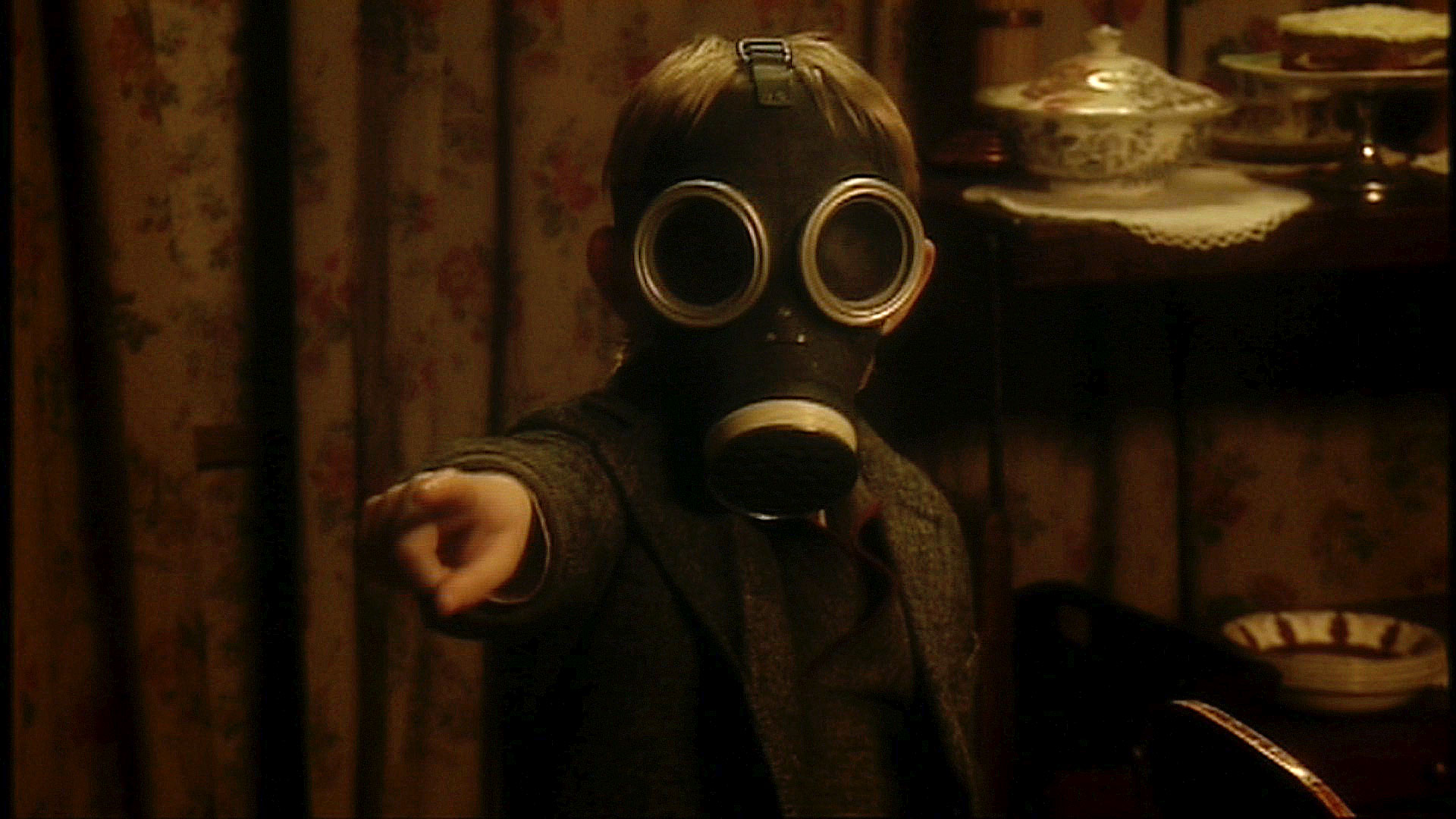
The icon of the hazmat suit is especially influential because it holds deep background associations, which have become entangled in its current representation. Historically, hazmat suits have been associated with the threat of injury by chemicals. Most notably, full-body suits and masks were worn by soldiers during World War II, in order to protect themselves from gas attacks. These internalized images of faceless fighters wearing gas masks have been normalized by popular culture, and have even been idolized in the steam-punk aesthetic. Modern television characters such as the empty child in Doctor Who have furthered this normalization. Through its reproduction and integration in popular culture, the imagery of the gas mask has been internalized alongside its background representation of warfare; this has emphasized the association between a full-body suit and the fear of violence. 


Although the association of violence and the hazmat suit has developed, through a process of fragmentation and semiotic transcription, the icon has moved away from its association with warfare. The hazmat suit has become normalized as a tool to ensure the safety of civilians. The media has reported examples of the hazmat suit being worn by celebrities such as Russian president Putin, supermodel Naomi Campbell, and actor Howie Mandel. Although they have become sensationalized, these reproductions hold meaning. The multiplicity of the hazmat suit in popular culture has allowed it to become defined as normal. This reproduction and redefinition of the hazmat icon is essential to the cultural acquisition of it. 


The available and transmissible quality of icons allows them to stay relevant in popular culture. After an icon is fragmented and reproduced in media, it becomes incorporated into the public sphere of life. The hazmat suit has become inconisized as a symbol of both violence and safety; it represents the ultimate form of physical protection, yet is still fundamentally a clothing item associated with a history of violence. Overall, the lingering association between the hazmat suit and warfare has contributed to its unintentional heightening of fear surrounding the pandemic.


The image of a woman being sprayed with antiseptic upon her arrival at an airport in Batam, Riau Islands, Indonesia embodies this fear. The image depicts a crowd of masked officials wearing hazmat suits, spraying an unknown substance on a lone, physically unprotected woman. The actors within the performative stage of this photograph embody both sides of the binary opposition. By spraying the woman with antiseptic, the masked officials attempt to ensure the safety of their country, yet the violent, faceless quality of the act furthers the fear which the suit embodies. The woman in the photograph then becomes the victim of violence associated with the suit, but, in her supposed breach of safety, she also embodies the fear of the virus. 

This photograph’s complex portrayal of the binaries associated with the pandemic make it an especially effective icon. The photograph represents to its viewer how the threat of the virus, and so, the fear of harm, is embodied in the people around them. It also represents how easily the icon of the hazmat suit is able to transform the person wearing it from representing safety to representing violence. Thus, in revealing the hazmat suit's binary quality, this iconic photograph emphasizes the feelings of mistrust and fear of harm from others which the COVID-19 pandemic presents. 

War and Peace: The Importance of a Photograph


Photographer Alyson McClaran captured this moment during protests in Denver, Co. on April 19th. Two self-identified health care workers block protesters (including a woman waving a sign saying “Land of the Free”) from interfering in hospital traffic. The protests are in rebuttal to enduring stay-at-home orders. (The Denver Post)


Sarah: Hi everyone! Today we wanted to talk about Robert Hairman and John Louis Lucaites’s book, No Caption Needed. Chapter two, Public Culture, Icons, and Iconoclasts, and how this relates to the pandemic and recent events.

Owen: I think one thing to jump into is a picture I saw of nurses blocking the protests to reopen the country. I thought there was one image in particular that seems like it may become the iconic image of this time. There is a woman leaning out her car window with a sign that said something like “Freedom Comes First!”, yelling at a nurse who is standing in front of her SUV. It definitely has a lot of elements that could make it an icon. But time will tell. 

Anastasia: I did a quick search, and it is a nurse standing in a walkway, and the woman leaning out of her car has a sign that says “land of the free”. There is a video of this too, as well as the still images. In the video, you can hear the woman and other protesters cursing out the nurses and attempting to scare them into getting out of the way so they could continue their protest. The image does feel emblematic of the struggle between people who want to go back to work but who refrain because of the shelter-in-place orders and people who want to follow the message of reopening the economy, even at the cost of our healthcare system and workers. Medical institutions are really bending close to the point of breakage with the number of incoming cases, the depletion of supplies and the exhaustion workers must combat to keep doing their jobs. 

Denny: It’s hard to describe, but this definitely reminds me of similar pictures of historical importance. You know, like the Vietnam War execution photo, or the Tiananmen square one. All of these photos have something in common, now that I think about it. They’re all “unstoppable force and immovable object” sort of photos, where the friction comes from the relationship between these two extremely powerful beings in conflict. Of course, the man in Tiananmen isn’t actually as strong as the tanks, but the image makes it seem that way, sort of like the nurse and the car. I know you might object to the Vietnam photo being included in that list, but even though the guy is getting shot I think he represents a really strong sort of determination.

Sarah: I also think this image is particularly powerful, and it is interesting people have already recognized it as being potentially iconic, because it immediately reminds me of an image I think most people have seen of the little girl standing in front of a tank. And I think it is one of those images you look at and it elicits a visceral response. Also in our recent history just within the United States, we have seen these kinds of images from protests with police standing in full riot gear facing a sole person who is unarmed just standing in front of them. There is this almost unequal or unfair feeling of a faceoff. This image just juxtaposes someone so calm, so strong, so of reason, with someone so destructive or irrational or scary. So I think it is interesting in this case that it is now a nurse and an angry protester. This is also fascinating to me because the protester is a woman, and one of the nurses she is screaming at is also a woman, so that disrupts this iconic imagery where the binary is usually backed up by gender. A man or masculine presence opposing a woman or a child is what we are more used to seeing in images like this. 

Alina: I was going to say that it is interesting, Sarah, that even in your response you used words like “destructive” juxtaposed with “soft”. These types of iconic photos usually depict a visual of protesting war or an act of war– some physical act of fighting. But right now, during the time of a global pandemic, we are fighting something we can’t actually see, a virus, and I feel like that is a part of why the photograph of two women, or two people, feels iconic. Regular humans are pitted against one another in this case, because we’re fighting a virus which isn’t a physical thing we can really protest against or fight physically. I think it is interesting how we have created an association of images of warfare with images of this time during the coronavirus pandemic.

Eva: I wonder if one of the reasons that this photograph seems to harken back to wartime imagery is that, like Alina said, we feel as if we are at war with this invisible enemy. And that this feeling of wartime has been propagated in the media by the symbolic language being used to say that that healthcare professionals are on the front lines of this crisis, directly affiliating healthcare workers with military personnel. To me this image seems to be so iconic because it highlights what has already been established in the background during this crisis, the idea of the nation's health care professionals fighting back against the people who are acting in their own interests.

Denny: I think it’s important to make the distinction here between what feels like war and what actually is war. Obviously no one is on the side of the disease, people are just conflicted over how to best deal with it; either place extreme limits on what people can and can’t do, or just allow it to run its course. I think that a lot of people feel like this is a war, which might be why these images feel like they could be iconic the way wartime images are, but really the subjects are entirely different. It’s by perpetuating this emotional, kneejerk sort of wartime response that the media can say, “hey, the world is awful, it’s so bad that we need to react to it like we did to Tiananmen” or something like that. And of course it’s more valuable to have an icon that’s more dramatic, so by exploiting and exaggerating the situation the media makes an icon artificially.

Anastasia: I don’t think there has been a point of time, certainly not in my lifetime, where there was a threat this massive and this transformative before us, and we had a leader just not step up to the plate and even try to unite the country. I haven’t seen any attempts to create national unity, it’s just governors scrambling to try to secure resources, and though they are trying to help each other to the best of their abilities, there is no one individual leading the charge in confronting this ‘antagonist’. Also, another image that comes to mind with the idea of an individual resisting a military-like force is from the 1989 Tiananmen Square protests. There is an iconic photo of an incoming line of tanks stopped before one man who stands unmoving and statuesque. I feel like in terms of your observation, Sarah, there is also a gendering in this photo as well. There is one man alone in the face of a crawl of military power, which is itself regarded as masculine. 

Sarah: I also think, back to Alina’s point that these images strike these feelings in us as if they are images of war but usually they have citizens vs government or military. But now, it is our own citizens vs other citizens. This image has made it person to person. So what does that say about the success, in some ways, of political actors to turn this into a partisan issue. We don’t know the political leanings of the people in the photos, but it looks like a photo of conservative vs liberal ideals. It paints it so perfectly as that issue. It’s kind of terrible, but it’s also pretty impressive that this has become such a partisan issue and become person to person.

Eva: One of the other reasons this image might feel so similar to wartime is that the health care workers are wearing uniforms. These uniforms and the masks that cover their faces make them appear to be symbolic figures representing all healthcare workers, not individuals protesting the actions of other individuals. In this way these figures seem to be a part of a greater force than their own personal values.

Owen: There was an article in the New York Times from April 28th about how these protests are being funded and led by the same people who led the tea party movement in 2009. In the NYT article they make the argument that these protests are an attempt to set up this upcoming election. This could be a way they can galvanize people and get people passionate about whatever they want and turn it into votes come November. It’s interesting to think about how the icons that pop up from these events might be an important part of the 2020 elections.

Anastasia: On the issue of partisanship, it’s interesting to think about where Joe Biden will fit into all of this. How will he fit in compared to Trump? And how will his approach as a presidential candidate to this pandemic shape the political landscape for years to come? We’re already getting a pretty clear picture over one president’s response, but how could the other? How, and who, will set the standard of presidential conduct in health crises?

Denny: I mean, you’re making the assumption that Biden has put any thought into this at all. What’s interesting to me, though, is that the vast majority of those who believe the virus isn’t that big of a deal are Republican voters, but Trump himself seems to take the virus very seriously. This puts Biden in a double bind. He either has to oppose Trump and weaken restrictions, which would probably be unpopular with Democrats, or meet Trump on his own terms, which would also be pretty divisive among Democrats who vote exclusively on the “Trump Bad” ticket. He’s really whittling his base down to nothing but the “vote blue no matter who” Democrats.

Sarah: There is a quote on page 30 from Hairman that says, “they draw on stock images of war and peace, poverty and the distribution of wealth, civic duty and personal desire, and other unavoidable concerns of collective life”, which I think does speak to the fact that these binaries are how icons are made. 

Anastasia: On the same page further down, it reads “the iconic image is a moment of visual eloquence, but it never is obtained through artistic experimentation”. So, the photo and footage we are speaking of with the nurse in front of the car is not something that was engineered. It was a genuine moment of explosive anger and two people acting in their own perceived idea of best interests.

Alina: Right, and going back to your question, Anastasia, related to Biden, I’ve been thinking about whether or not we are strengthening the binaries that exist within our society or whether or not those are becoming less relevant in the face of this pandemic. And especially this photo that Owen proposed, I think has condensed the binary of the liberal, informed, democratic and republican uninformed, or even aggressive, counterdemocratic. So going back to Biden, I think he will fit into this binary on the liberal and informed side of the framework, and I think that as the crisis continues, his position on that side will only be strengthened. 

Sarah: It will be interesting to see how our perception of this photo changes over time, and if the sides that we see and feel now hold up over time. I wonder if there will be a time when this photo looking back will be more unifying than it feels now. 

Denny: It really depends on what narrative we decide to spin about the virus. The only two roads forward that I see are affirmation that we took the right measures to prevent spread or regret that we worried far too much over something relatively unimportant. Personally, I expect someone powerful who owns a media conglomerate to decide it’s too embarrassing, or bad for profit, to admit the harm they had done by misrepresenting covid 19, and therefore spread this narrative that it was extremely important to go into quarantine, even though it probably isn’t. Moreover, I expect the general public to accept this narrative unquestioningly. I think, then, that the picture is going to turn into a symbol of hope, that rationality can stand so peacefully in opposition to lunacy. It certainly helps that the protestor is right wing. The media can absolutely create this perception that she and those she represents were an insane offshoot of otherwise rationally subservient society.

Eva: In the short term the way that this image and images like it are interpreted and represented especially in politics will be very interesting and it will probably vary widely as this image evokes strong emotions. This image could be portrayed as the strong loyalty of American health care workers in the face of fear, ignorance or selfishness, but it could just as easily be touted as iconic of the American dream and of an individual standing up for their personal rights and freedoms as an American. However, the even bigger question of how it will be interpreted historically will really depend on what is remembered, I would not be surprised if the lense of nostalgia spins this as just one person acting out during what was otherwise a global event of everyone working together for a common good. Regardless, I think the one thing we can be sure of is that this image will not fade into obscurity any time soon.